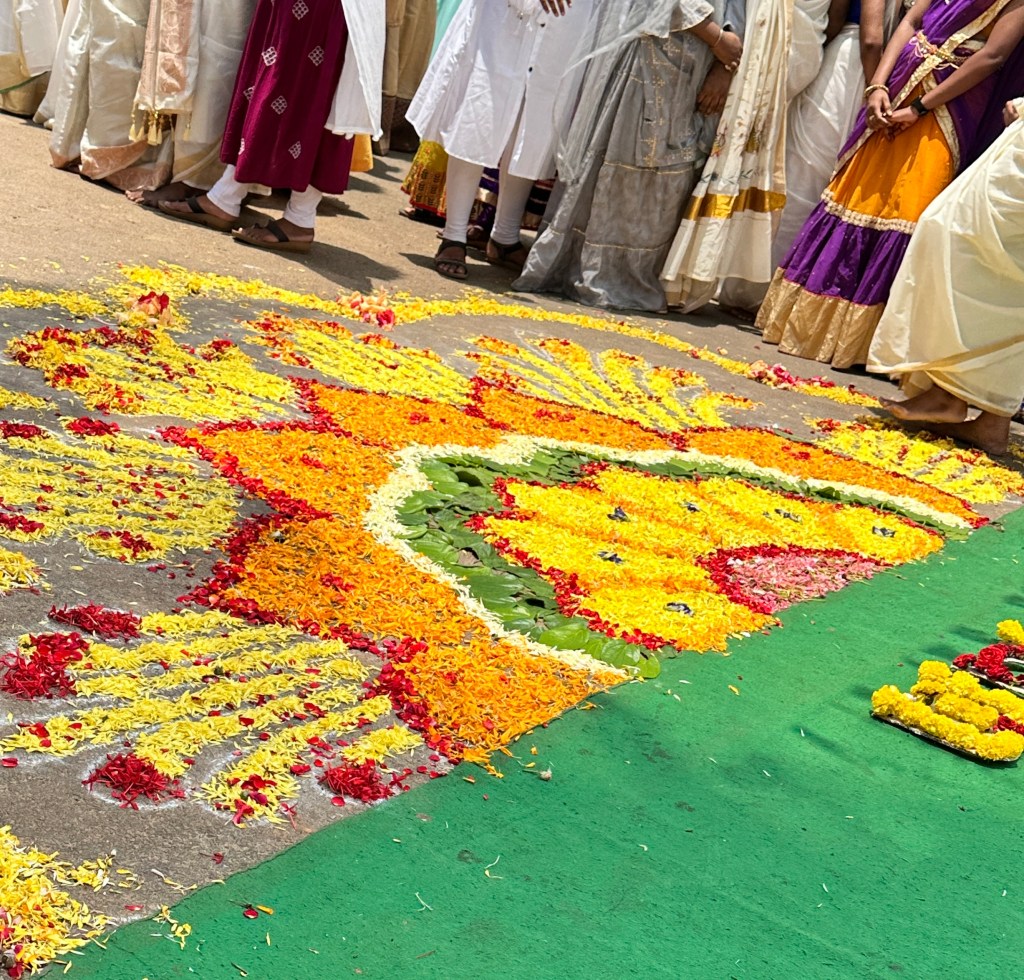
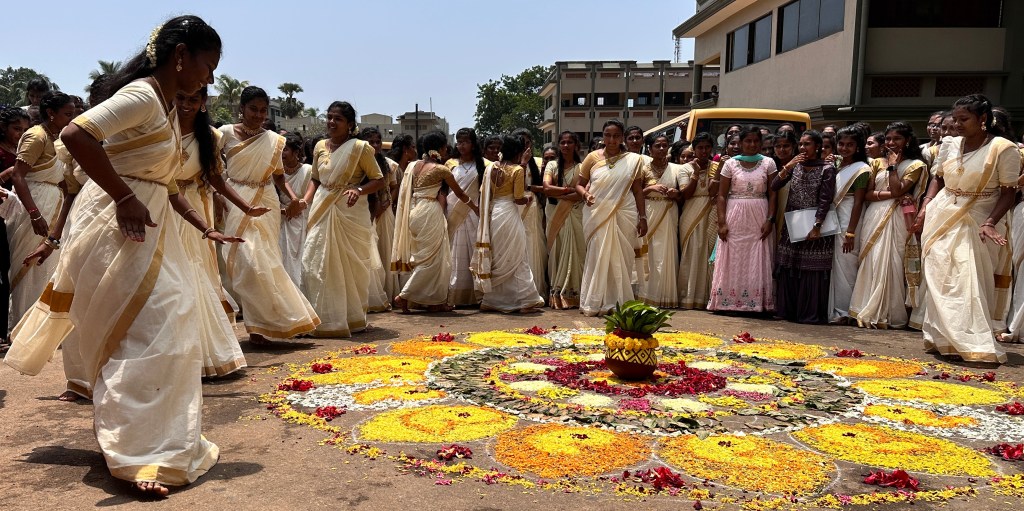
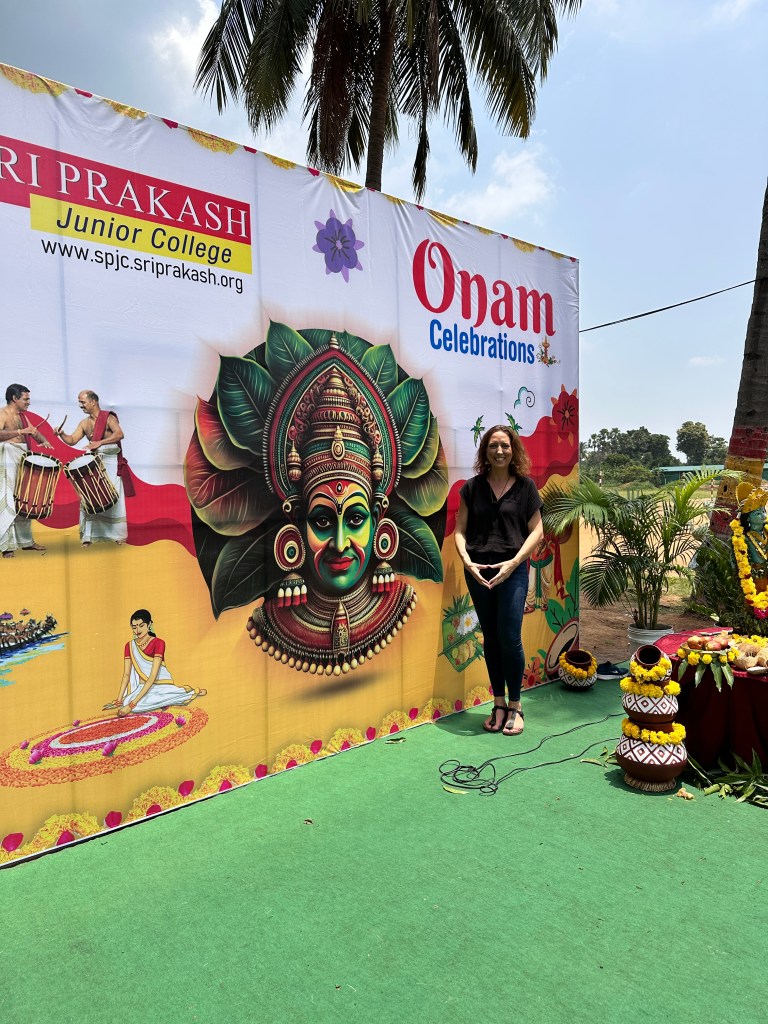
In the southern state of Kerala, people are celebrating an important festival called Onam. The 10-day-long festival is meant to honor the homecoming of the Asura King Mahabali from the Patal Lok. This event signifies the victorious return of a prominent ruler who once governed Kerala with peace and prosperity. Aside from the vibrant parades and activities lined up, Onam is also celebrated with a popular traditional feast called Sadya. This festival was honored at the end of August this year (I know, Im behind on posting), I have been meaning to dive deeper into both Onam and Sadya, and why they are an essential part of the rich cultural and traditional practices in Southern India. Although, Amala and I were not in Kerala, we did get to celebrate at the Sri Prakash International School and Ayurvedic Hospital in Andhra Pradesh. I didn’t have traditional Kerala dress, and to be honest I didn’t even know I was going to a celebration…. it just happened because it was literally right outside my door.
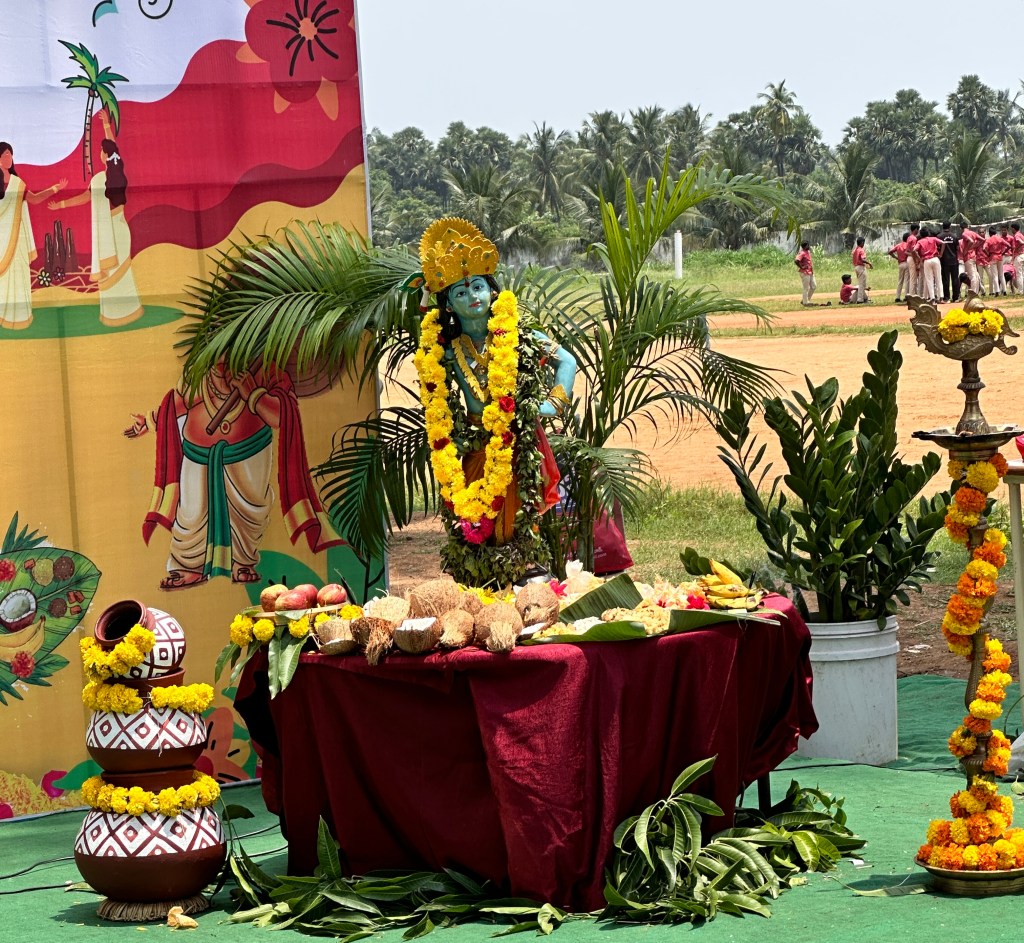
Onam’s celebration is deeply rooted in Hindu mythology and folklore, and it is considered as one of the major festivals in India. The start of the festival is marked by the Atham day, wherein the people of Kerala begin to decorate their houses with intricate floral designs called pookalam. It’s a grand gesture of welcoming the prosperity and abundance that Onam brings. Throughout the festival, people engage in various activities such as dances, boat races, elephant processions, and traditional sports like Vallamkali and Pulikali. During the celebrations, I had to crack a coconut for an offering to the table below and then they put me in the local newspaper. The final day of the festival is called Thiru Onam, wherein the Sadya feast is served.
Sadya, which means a grand feast in Malayalam, is inseparable from the Onam festival. This meal is served on a banana leaf and consists of various vegetarian dishes, rice, sambar, rasam, curd, pickles, and papadum. It is prepared with an array of vegetables and spices, which gives it a unique and delicious taste. The Sadya is served by men traditionally and has a specific order to it. It starts with rice served on the banana leaf, followed by parippu (dal), sambar, rasam, and then upperi (banana chips), pappadam, and then payasam (sweet dessert), and more. Every dish has a specific flavor and texture that complements the other dishes served.
Sadya is a feast that brings communities together in Kerala during the Onam festival. It is not only a celebration of good food but also a celebration of diversity and unity. People from different castes and religions come together and share the meal in a sign of respect and brotherhood. Sadya is a testimony to the rich cultural and traditional practices that are still alive in modern society.
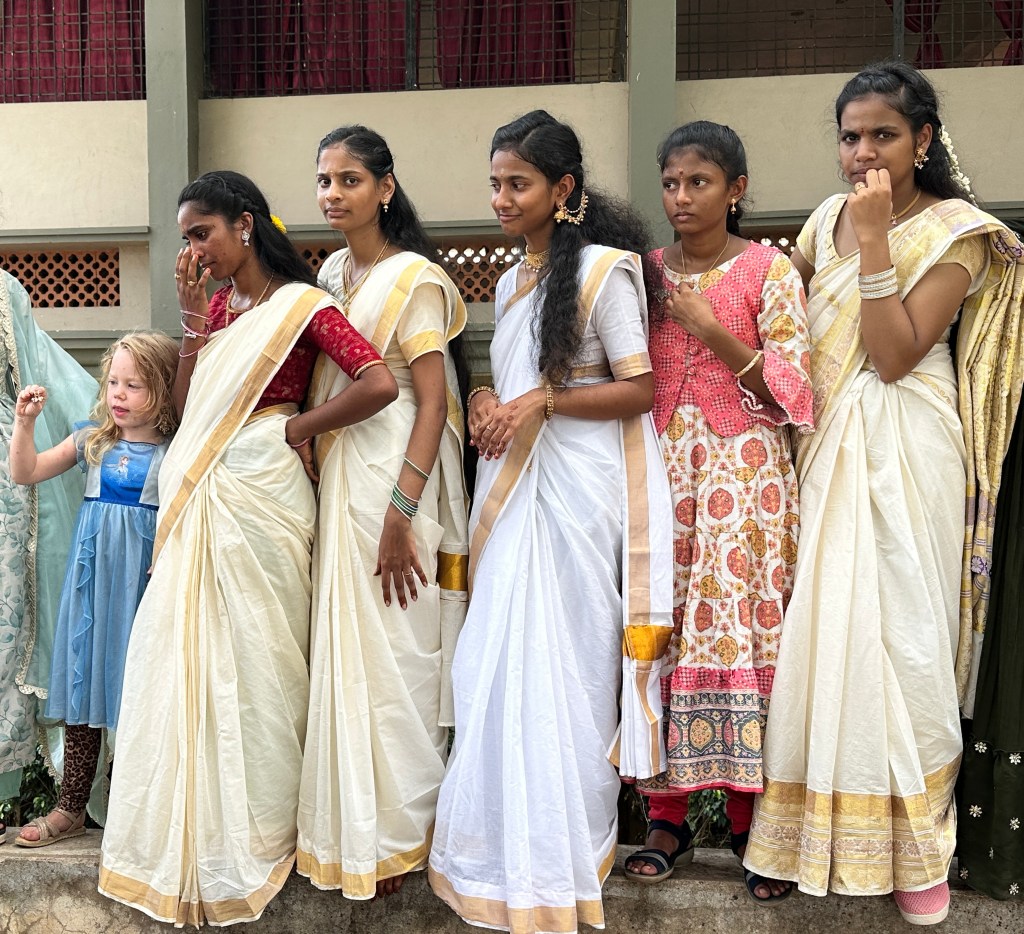
Onam and Sadya are an integral part of Southern Indian culture and tradition. The festival is a perfect example of how people in Kerala celebrate their heritage and come together to share the joy and happiness of Onam. It is an occasion where people dress in traditional attire, visit relatives and friends, and exchange gifts. Sadya, on the other hand, is a traditional feast that is prepared using ancient recipes passed down through generations. Both of these customs prove that India’s rich cultural and traditional practices are still vibrant, lively, and celebrated to this day.
Sadly, I didn’t take a picture of the food they gifted me on the banana leaf. It was sweet and delicious….. which was a special treat because the food at Sri Prakash was so spicy!
Onam and Sadya are cultural practices that have been in existence for centuries in Southern India and Kerala. These customs aren’t just symbols of the region’s tradition, but also acts as a unifying factor among the people. The grand festival of Onam, and the scrumptious Sadya, celebrates abundance, prosperity, and the bond of family and community. In this blogging journey, we have learned more about these practices and their significance in the cultural heritage of Southern India.
 Exploring Now
Leave a comment